
**The AD8451ASTZ: A High-Performance Analog Front-End for Advanced Battery Test and Formation Systems**
The rapid evolution of energy storage technologies, particularly lithium-ion batteries, has placed unprecedented demands on the precision, efficiency, and safety of manufacturing and testing processes. At the heart of these advanced systems lies the critical component known as the analog front-end (AFE), which serves as the bridge between the raw analog signals of a battery and the digital processing core. The **AD8451ASTZ from Analog Devices** stands out as a premier solution, engineered specifically to meet the rigorous requirements of modern battery test, formation, and cycling equipment.
This highly integrated IC combines a programmable gain instrumentation amplifier (PGIA) with a synchronous demodulator and a precision analog-to-digital converter (ADC) driver. Its primary function is to accurately measure current and voltage during the crucial battery formation process—where cells are charged and discharged for the first time to stabilize their electrochemical characteristics—and throughout their lifecycle testing. **The exceptional accuracy and stability of the AD8451ASTZ are paramount**, as even minor errors in voltage or current measurement can lead to incorrect state-of-charge calculations, reduced battery capacity, or, in worst-case scenarios, dangerous thermal events.
A key advantage of this AFE is its **ability to operate in a four-quadrant mode**, meaning it can seamlessly source and sink current. This is essential for simulating real-world charging and discharging cycles with high fidelity. The device supports a wide range of current levels, from milliamps to amps, making it versatile for testing everything from small consumer electronics cells to large-format automotive or grid storage batteries. Furthermore, its **low noise and high common-mode rejection ratio (CMRR)** ensure that measurements remain accurate even in the electrically noisy environments typical of industrial test racks.
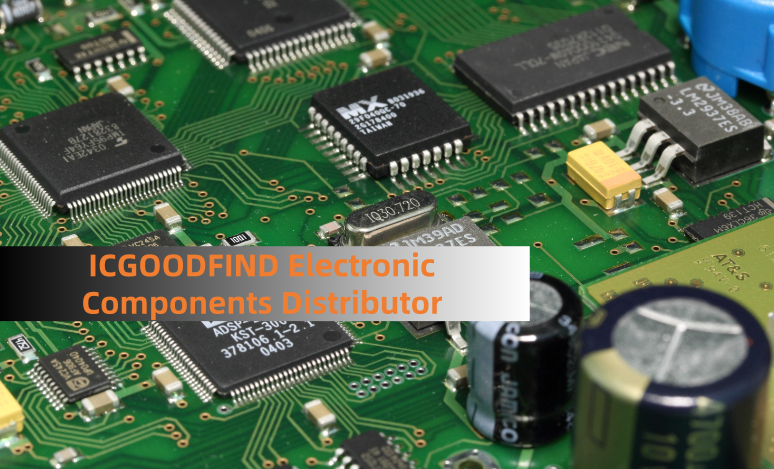
Integration is another significant benefit. By consolidating what would typically require multiple discrete components—such as amplifiers, filters, and drivers—into a single chip, the AD8451ASTZ simplifies system design, reduces the board footprint, and enhances overall reliability. This integration also accelerates time-to-market for equipment manufacturers while providing a more robust and manufacturable solution.
For system architects, the device offers flexible programmability. The gain of the instrumentation amplifier can be set via external resistors, allowing engineers to tailor the measurement range to their specific application. This programmability, combined with its wide bandwidth, enables the design of systems that are not only precise but also fast, capable of responding to the dynamic conditions of a battery under test.
In conclusion, the AD8451ASTZ is more than just an amplifier; it is a comprehensive signal conditioning solution that addresses the core challenges of battery test systems. Its high precision, integrated design, and robust performance empower engineers to build next-generation equipment that ensures the quality, longevity, and safety of the batteries powering our modern world.
**ICGOODFIND:** The AD8451ASTZ is an indispensable, high-performance analog front-end that sets the benchmark for accuracy and integration in advanced battery test and formation systems.
**Keywords:** Analog Front-End (AFE), Battery Test Systems, Precision Measurement, Programmable Gain Instrumentation Amplifier (PGIA), Four-Quadrant Operation.

